
HERITAGE
Seventy years of homebuilt helicopters
The Safari traces its line back to 1953 and the Helicom. Every owner since has flown a design refined by machinists, engineers and builders who flew what they made.
Timeline
From the Helicom to the Safari 500
11 chapters, one lineage. The machines changed; the idea of a real helicopter you can build and fly yourself did not.
-
1953
The Helicom
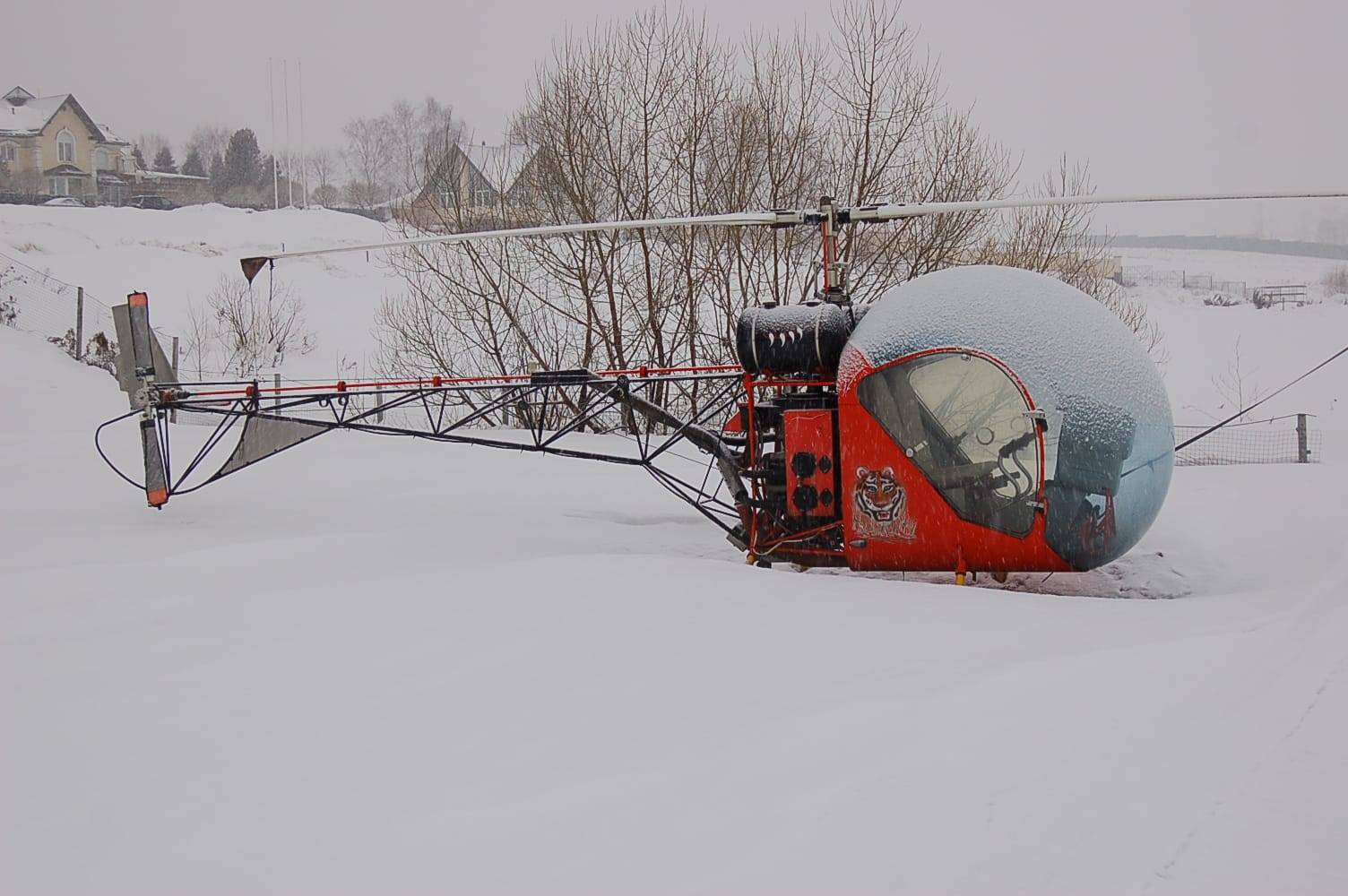
Aerospace engineer Harold "Pop" Emigh and his son design the single-seat Helicom, a homebuilt that would have qualified as an ultralight helicopter under today's rules. Many were built, and some still fly.
-
Early 1970s
Two seats and a Lycoming
Emigh modifies the design for a 150 hp Lycoming, creating a two-place helicopter.
-
1970
The Commuter II
Manufacturing rights and jigs are sold to International Helicopters of Mayville, New York, who rename the aircraft the Commuter II A and B — the original airframe with a streamlined cabin.
-
1979
Canadian Home Rotors
Canadian Home Rotors Inc. (CHR) is founded when president Murray Sweet, a skilled machinist, buys his first kit and acquires the Canadian marketing rights. After flying his Commuter IIB he begins modifying it for lighter weight, simpler maintenance and safety. When Tamarind International, the later owner of International Helicopters, folds after 14 months without completing a kit, customers come to Sweet for parts — and CHR moves into manufacturing components, then complete kits.
-
1986
CHR incorporates
Canadian Home Rotors incorporates.
-
1992
The Safari debuts at Oshkosh
The Safari is shown at the EAA convention in Oshkosh. The company had never advertised before July 1992 — customers came by word of mouth. Because it resembles a Bell 47, the design was also marketed for a time as the "Baby Belle."
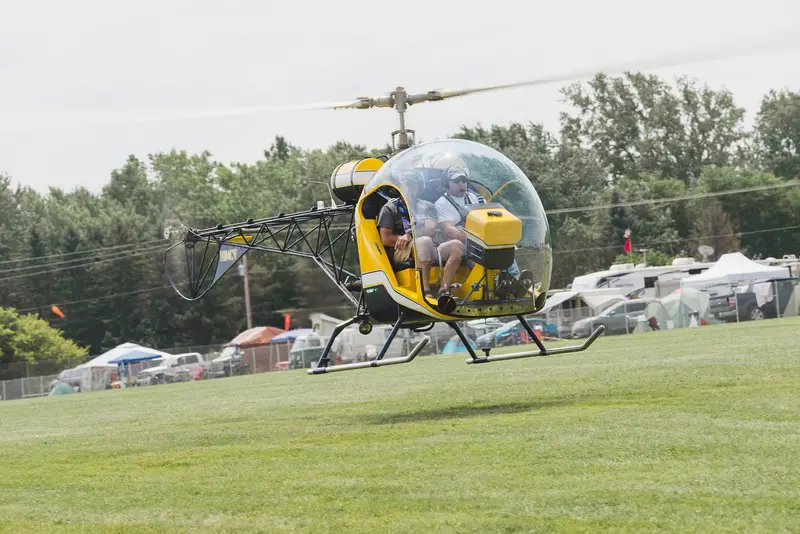
Yellow Safari 400 lifting off at Oshkosh -
2005
The Bakers get involved
Bobby and Delane Baker get involved with the company.
-
2009
Marianna, Florida
The Bakers purchase the complete design rights as CHR International in Marianna, Florida. Canadian Home Rotors closes, and an extensive program of engineering and upgrading begins — combining accumulated tribal knowledge with modern engineering tools.
-
2011
The Safari 400
The Safari 400 is introduced with a new, more robust rotor head, an engine governor and electric cyclic trim, among many other upgrades. Every critical component is individually serialized and tracked through material certification, dimensional inspection and assembly verification.
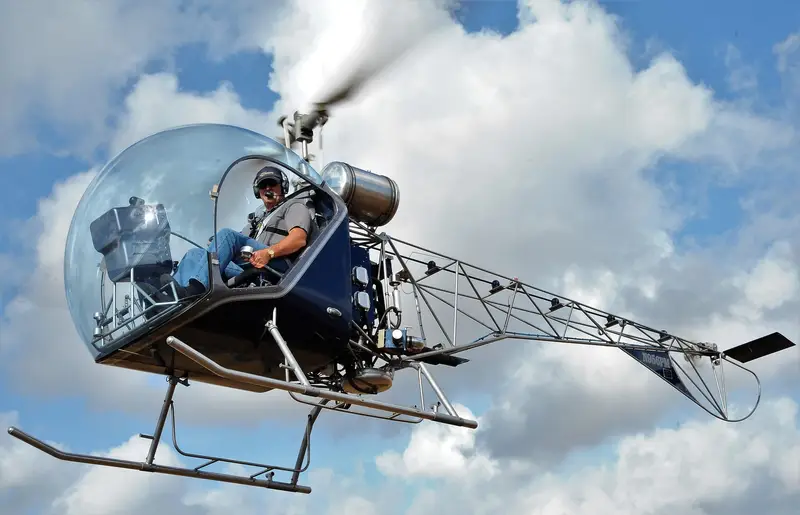
Safari 400 hovering, dramatic clouds -
2018
The Safari 500
The Safari 500 arrives: the proven Safari drive train and controls inside an enclosed, sleeker cabin with a carbon-fiber exterior shell. It is first shown around 2018.
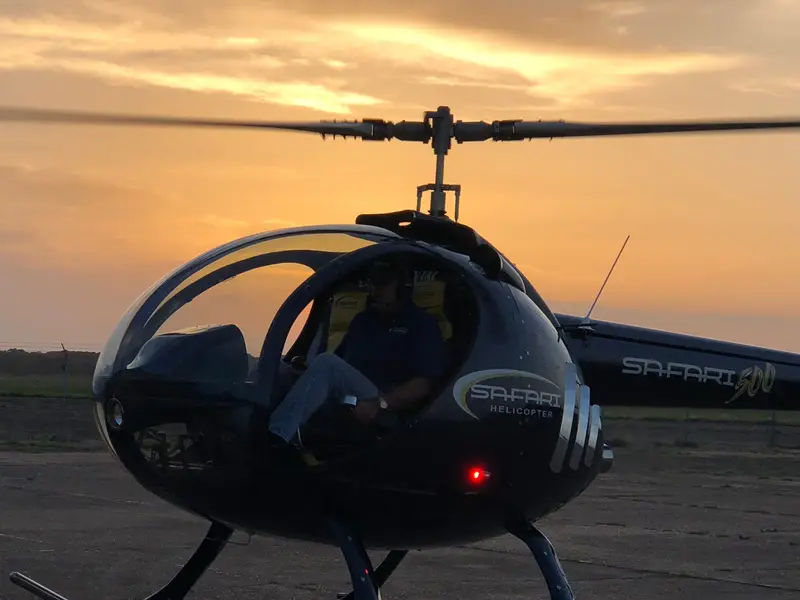
Safari 500 at sunset -
Today
More than 60 years of Safari
For over 60 years, Safari owners have counted on their Safari helicopter to take them to their next adventure. The 400 and the 500 are built today with the same promise: a real aircraft engine, a proven drive train and the quality of certified at the price point of experimental.
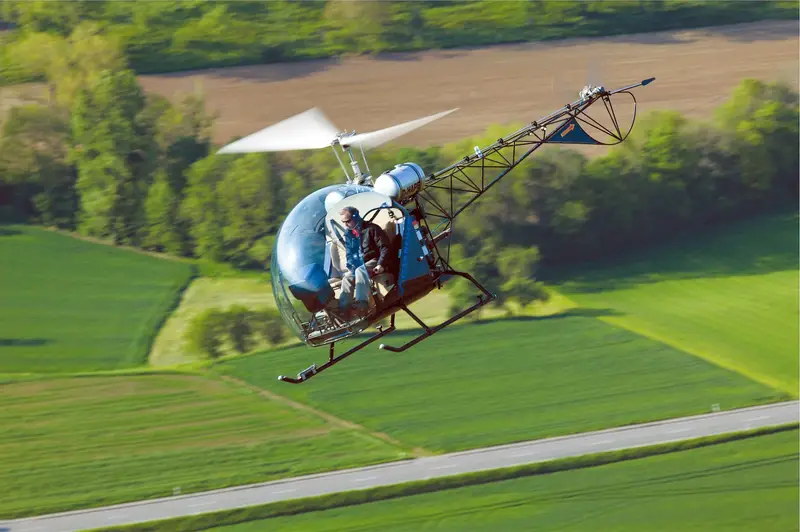
Safari 400 over green fields
The promise
For over 60 years, SAFARI owners have counted on their SAFARI Helicopter to take them to their next adventure.
Safari brings the quality of certified to the price point of experimental.
Today
Two Safaris. Pick yours.
Safari 400: Certified quality. Experimental price. Safari 500: Sleek lines. Same proven heart.